.gif)




Why the MSF26 programme is built around the right questions, not ready-made answers
In an industry as complex and fast-evolving as yachting, the real challenge is no longer access to information — it is relevance.
Conferences are full of panels, opinions and well-rehearsed talking points. What is far less common is a programme structure that starts by listening to the industry first, then curates the agenda around the real pain points emerging from that listening process — and finally creates the conditions to turn those insights into clear, usable outcomes.
This is the approach behind the 2026 programme.
Rather than presenting a fixed agenda months in advance, the programme has been shaped through active dialogue with industry stakeholders across the Mediterranean and beyond. The result is a structure designed not to showcase opinions, but to extract value.
A curated structure built around three strategic layers of the industry
The programme is organised around three interconnected strategic pillars, each addressing a different layer of the yachting ecosystem:
- Destination Strategy
- Business Strategy
- Commercial Strategy
These pillars reflect how the industry actually operates. Challenges at destination level influence business models; business decisions shape commercial behaviour; and commercial pressure feeds back into how destinations evolve.
Each pillar is explored through a series of Small Group Sessions (SGS) — twelve in total — designed to go far beyond open discussion.
Small Group Sessions: participation by design, not by chance
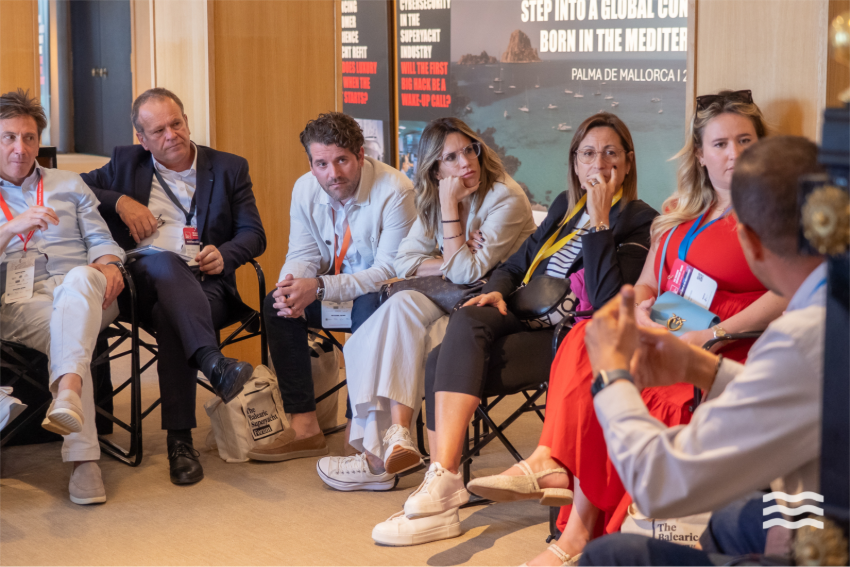
At the heart of the programme are 12 Small Group Sessions, each built around a clearly defined strategic challenge.
These are not traditional panels, nor informal roundtables. The sessions are intentionally designed to create:
- Active contribution rather than passive attendance
- Structured discussion rather than free-flowing opinion
- Honest exploration of constraints rather than idealised scenarios
The questions driving each session are not generic. They are the result of months of active listening to the industry, ensuring that discussions focus on what is truly creating friction today — not recycled talking points from previous years.
The objective is clarity: understanding where challenges originate, why they persist, and what could realistically change.
From discussion to outcomes: closing the loop
One of the most common frustrations with industry forums is that conversations end when the event ends.
Here, the structure is deliberately different.
Insights emerging from the Small Group Sessions are not isolated moments. They feed directly into thematic Think Tanks on Day 2, where they are:
- Consolidated and prioritised
- Tested against broader perspectives
- Translated into structured conclusions
This mechanism ensures continuity between participation and output. Ideas raised in smaller, trusted environments are elevated into a wider strategic context, with the explicit aim of generating actionable insights the industry can use.
Why this approach matters now
The yachting industry is navigating increasing complexity: regulatory pressure, talent challenges, destination capacity limits, evolving client expectations and shifting commercial dynamics.
In this context, progress does not come from louder opinions, but from better questions, asked in the right setting, with the right people, and within clear constraints.
A programme built on listening, curation and participation is not a format choice — it is a strategic necessity.
Understanding the programme: what the dedicated webinar will focus on
Given the level of curation and the participative nature of the programme, the full structure is best understood through a dedicated one-hour webinar.
Rather than simply presenting a list of sessions, the webinar will focus on what genuinely helps participants decide how — and where — to engage:
- Who each session is designed for
Profiles, level of involvement and the type of contribution expected
- How the dynamics work
Case-based discussion, structured frameworks, real constraints and facilitated participation
- What comes out of them
Shared conclusions, prioritised insights and inputs that feed directly into Day 2
Access to the webinar and registration details are available here
And remember, this is not a programme designed to fill notebooks.
It is designed to shape thinking — and influence action.